
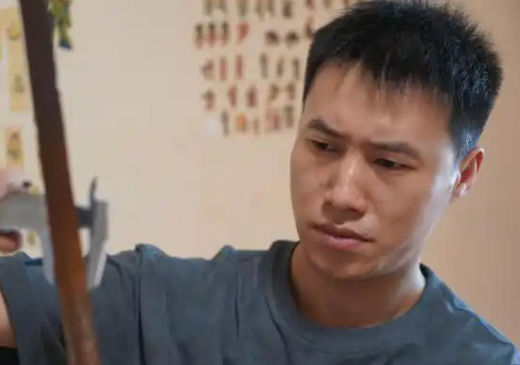
Wang Yikai. (Splied by China News Service)
In June this year, a hot search for #There are less than 10 practitioners in the country, he is still sticking to it# pushed Wang Yikai from behind the scenes to the front.
In the video, this post-90s ancient weapon grinder, wearing gloves, picked up the grinding stone in his studio outside Qionglai, Sichuan, and touched the blade with his fingertips. When the brown rust powder fell, the ancient knife began to reveal the true cold light of steel. With the same action, he had repeatedly carved it over more than 3,600 days and nights.
Some people are curious, "Have you ever encountered a sword with a very heavy 'killing aura' during the grinding process?", and some people are questioning, "What's the difference between a grinder and a sharpener?"
Wang Yikai told reporters, "If I were just starting out, I might be a little angry when I was questioning." But now, he would say to these people, "It doesn't matter, just learn more, just learn more."
"At the beginning, many people thought I was grinding a kitchen knife."
Like many boys, Wang Yikai's childhood was also spent in the "Jianghu Dream" of bamboo swords and wooden swords. But in the past, he didn't think it had much to do with his future.
He studied electronics and electrical engineering in the technical secondary school, and he had nothing to do with grinding ancient swords.
Until 2015, he accidentally bought an antique knife from the fresh market, and he had an indissoluble bond with this industry. "Not long after buying it, a friend accidentally scratched the knife." In order to repair the knife, Wang Yikai gradually came into contact with the "grinding circle" and the ancient weapon circle, and it became uncontrollable. "These old objects become more and more delicious the more they look at. It would be great if they could restore their original appearance."
But when he was really determined to learn from his master, he found that he could hardly find a master. "In ancient times, grinders were independent professions and had a complete inheritance system, but it had been halted by modern times."
During those days afterwards, Wang Yikai was a little distressed: he studied ancient books, watched overseas grinding materials, ran to the museum to figure out the shape of the instrument, and visited experts everywhere... "No one taught me, I can only understand it by myself. The grinding skills of ancient swords cannot be understood by just reading the information, and I have to try it myself." He introduced, "And, the 'blade line' of ancient swords must be a straight arc, and a difference of 1 mm will lose its original temperament."
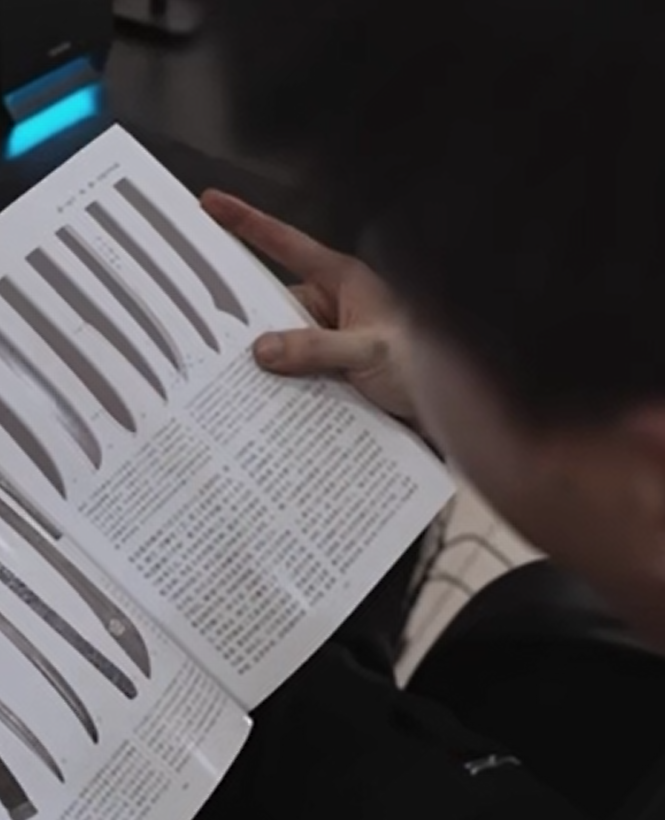
Wang Yikai checked books related to ancient weapons restoration.
In those years, he tasted the taste of failure. "At the beginning, I didn't even choose grinding stones. If you use the wrong ones, not only will it not remove rust, but it will damage the sword. Generally speaking, grinding a sword usually requires 6-7 different grinding stones, and it is very particular about which stones to use at any stage."
In order to understand the knowledge of "ancient weapons grinding", Wang Yikai often locked himself in the studio and stayed for most of the day. Occasionally, when passing by, hear the sound of sharpening the knife in the house, they will mistakenly think that he is the "kitchen knife" in the village.
"Although it sounds a bit funny, many people do have misunderstandings," Wang Yikai recalled. "At first, my family and friends thought I was 'not doing my job', and some netizens even said that restoring ancient weapons was 'destroying cultural relics'. It was not until they saw the ancient weapons regain their sharpness with their own eyes that they gradually understood the importance of this skill."
Let the sword re-invent the warm "breath"
The years of grinding ancient weapons are long and lonely.
Wang Yikai said that grinding ancient weapons generally takes several processes, from rust removal, plastic surgery, coarse grinding, fine grinding, polishing, and finally grinding the texture of the iron to retain the original historical traces. "The most difficult thing is plastic surgery. For example, a Han sword has eight sides, and the angle of each side is different, and it is entirely restored by the feel."
In order to do this "fine job", Wang Yikai sat in front of the workbench for 5 or 6 hours every day. "When it was the boringest, he was grinding the same gap for a week, but when the inscription under the rust layer appeared, all the fatigue disappeared."
"But usually, as long as the gap is not too big, we will keep it. Unless the gap is too much and too deep, it needs to be repaired again." In his opinion, every incompleteness on the tip of the knife is the password left in the era of cold weapons, waiting to be interpreted and treasured.
He once repaired a Han Dynasty ring-headed sword with more than 100 gaps on the blade, and traces of the battlefield remained at the break. "If you hold it in your hand, you feel sad and can imagine the scene of fighting on the battlefield a thousand years ago."
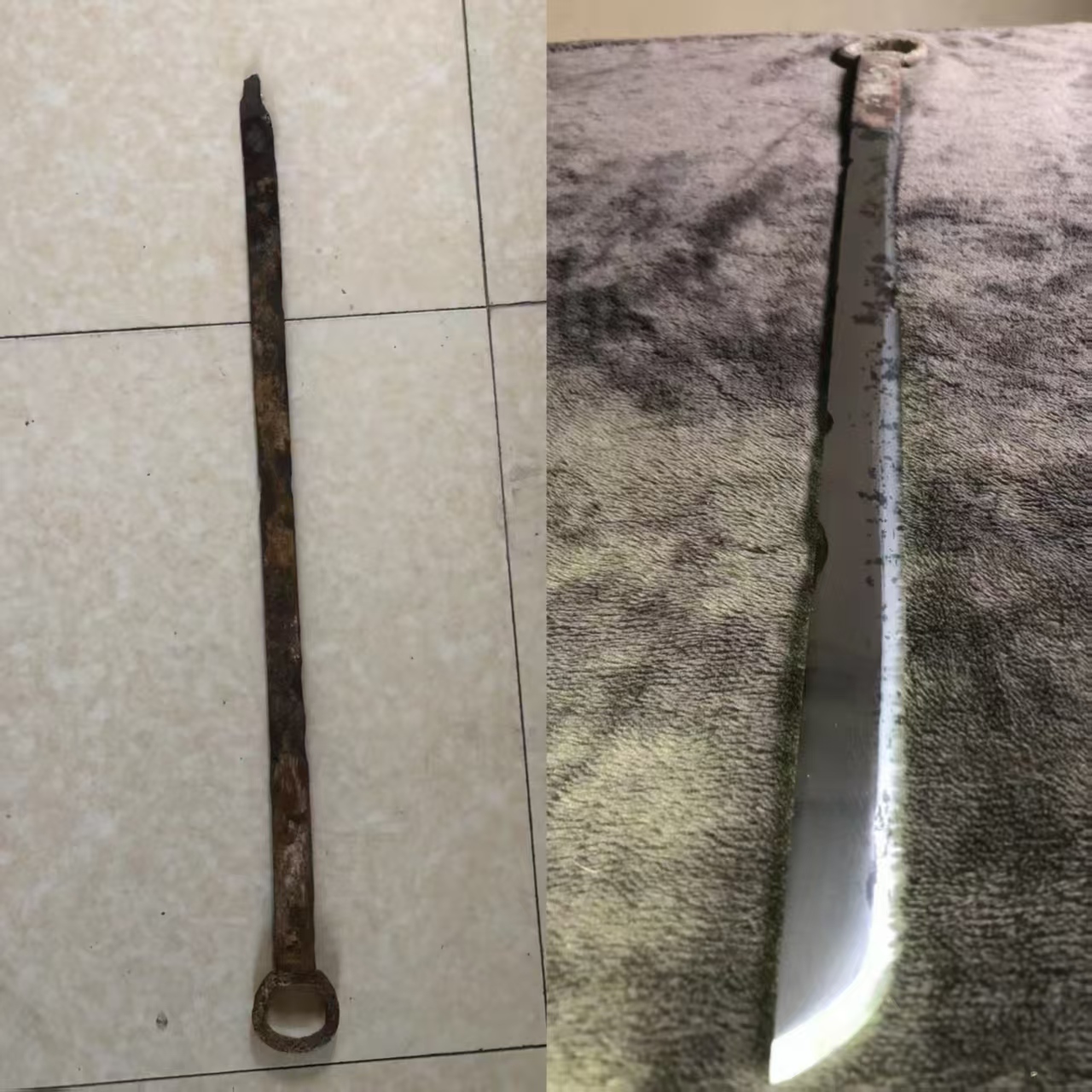
Comparison picture of the Han Dynasty's ring-head knife repair before and after.
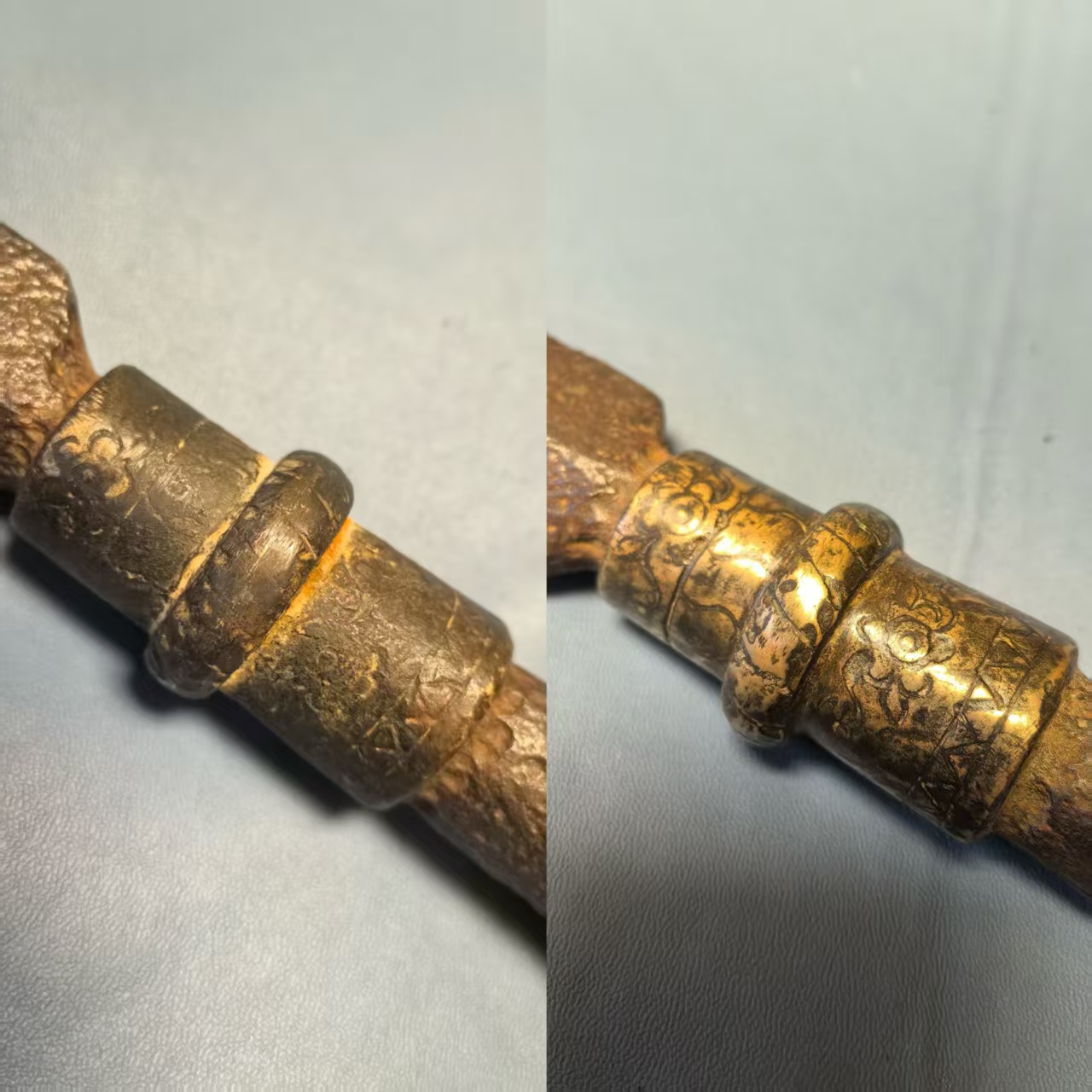
Comparison picture before and after the Ming and Qing spear repair.
"Repairing the old is the same as the old" is the principle that Wang Yikai has always adhered to. During the restoration, he often held his breath and focused his mind, as if he was "conversing" with the craftsman who beat the inscription thousands of years ago and the owner of the ancient sword. He said, "The names, patterns, and war marks on the sword must not be moved. All we need to do is remove harmful rust, restore functions, and preserve the original appearance."
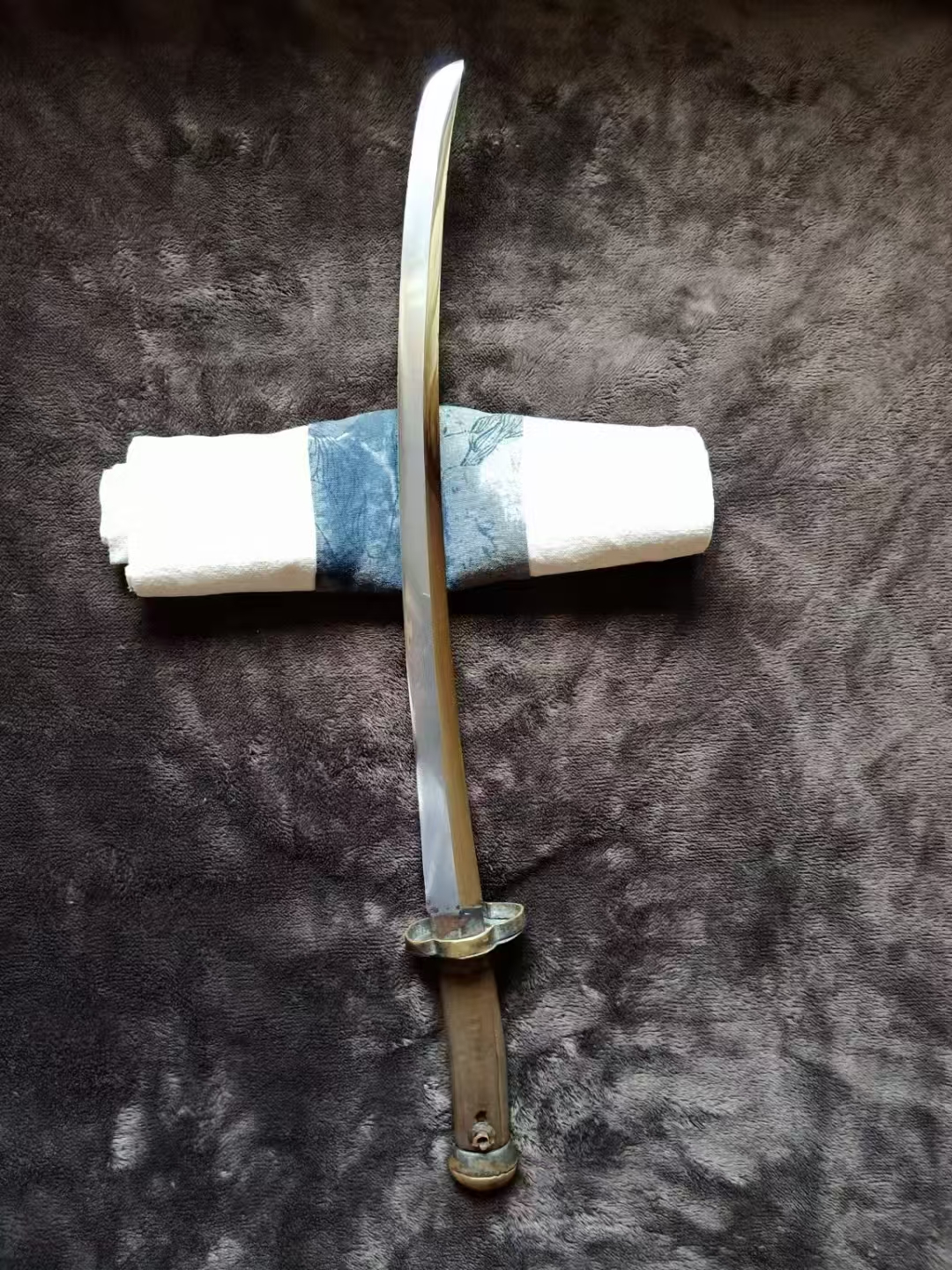
Photos after Qi's knife was repaired.
Over the years, Wang Yikai has handled hundreds of ancient swords. When talking about Chinese sword culture, his eyes shone: "The swords of the Han Dynasty, the horizontal swords of the Tang Dynasty, the hand swords of the Song Dynasty, the waist swords of the Ming Dynasty and the Qi family swords of the Qing Dynasty, the Yanfeng swords of the Qing Dynasty... The swords of each dynasty have their own characteristics, and the forging techniques are also very different."
When asked why he insisted on manual grinding and did not use machines, Wang Yikai explained that each sword has its own "temperament". Although the sword polished by the machine is neat, it lacks soul. Hand-made grinding is not absolutely regular, but more natural and comfortable.
The night is getting darker, and the "hissing" sound of the whetstone continues. As the rust faded away little by little, the history sealed in the shadow of swords and swords re-issued a warm "breath".
"Pick up the burden of inheritance"
In recent years, what Wang Yikai is most worried about is the inheritance dilemma. "In this industry, there are less than 10 professional practitioners in the country. Most of the apprentices I have taught have given up because of their high technical threshold and unstable income." What made him even more regretful is that "there is an apprentice with the best skills. Later, because he was not good at explaining the cultural stories behind the weapons, he chose to leave." This also made Wang Yikai realize: "The inheritance must be able to do and speak."
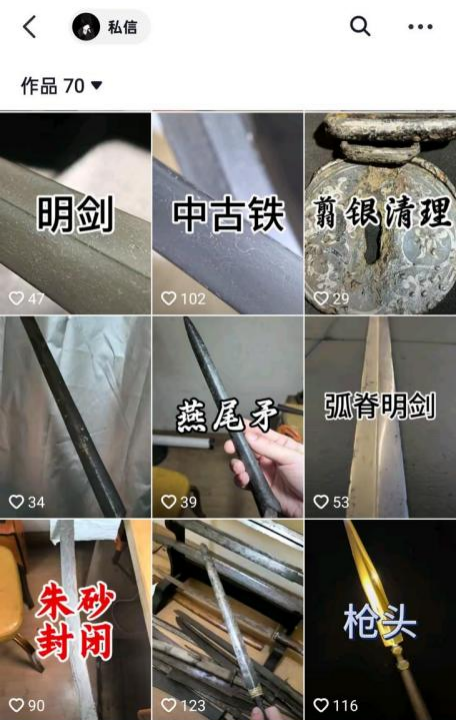
A repair video released by Wang Yikai on the short video platform.
In order to attract more young people to pay attention to ancient Chinese swords, in 2023, he opened an account on the short video platform to record the repair process. Under his works, netizens once commented, "I only realized after watching the video that ancient Chinese weapons were once the top in the world."
At present, Wang Yikai is preparing to apply for a representative inheritor of the intangible cultural heritage. "If there is a larger studio, more restoration results can be displayed, allowing visitors to touch history with their own hands."
He also plans to incorporate ancient weapons elements into cultural and creative industries, such as: replicating the sword ornaments of the Han Dynasty for exhibitions. "I want more people to know that swords are not only weapons, but also cultural carriers that carry war, etiquette and art. The Han Dynasty's steelmaking, the Song Dynasty's erroneous gold craft, and the Ming Dynasty's anti-Japanese stories can all be continued through the artifacts themselves."
Nowadays, more and more people realize the skill of grinding ancient weapons through Wang Yikai's short video: someone sends a rust knife to ask him to repair it, and someone comes from other places to learn. "A few days ago, an apprentice born in the 2000s said that he wanted to make the ancient weapon crafts into a 3D model so that more people could see it." This made Wang Yikai see the hope of inheritance.
In his opinion, "The weapons of every era have unique beauty. If only a very small number of people understand and appreciate it, it would be a pity. And what I have to do is pass on the skills and carry the burden." (Some pictures provided by the interviewees)